
The information provided on this site is for educational purposes only and does not substitute for professional medical or psychological advice. Consult a medical professional or healthcare provider for advice, diagnoses, or treatment. All the Anxieties is not liable for risks or issues associated with using or acting upon the information on this site.
- Why exercise when I’m already struggling with Anxiety?
- Getting Started
- Conclusion
- More from All the Anxieties
For anyone out there who struggles with Anxiety and hates even so much as the mere suggestion of exercise, I hear you.
This post isn’t meant to guilt trip anyone, body shame, or come across as anything that could be mistaken as judgmental. I’ve had my ups and downs with physical health, exercise and Anxiety, which is how I know this topic can be one of the more sensitive topics surrounding Anxiety.
It’s easy for someone who doesn’t struggle with an Anxiety to say that exercise is good for you, and to just go do it, but Anxiety is also a stressor related disorder, and if your specific stressor involves going out in public or showing physical symptoms of your Anxiety, or feeling anything that resembles the beginning of a panic attack, exercise isn’t a simple conversation.
So let’s break it down, and hopefully come to a better understanding about exercise and how it can help you manage your Anxiety.
Why exercise when I’m already struggling with Anxiety?
There are numerous benefits to exercise including increased longevity and the ability to stave off diseases. For normal individuals, 30 minutes of mid to high intensity exercise, practiced 5 days a week is a government recommended minimum for basic health maintenance.
If you have Anxiety, this holds true for you too, however, the way you experience exercise, especially with the challenges and the benefits, may be different from other people. So let’s talk about exercise as another form of anxiety treatment.
Distraction
There are different types of distraction based therapies like EMDR for PTSD, meditation or breathing techniques. While there are plenty of other ways to distract yourself from a flare up of Anxiety, Exercise is a sustained activity that requires focus and time taken out of your regular day to engage in. In a way, exercise is a program therapy that requires effort, but also poses physical benefits, in addition to the break from Anxiety pathways we normally experience.
Physiological Benefits
Aerobic exercise has been shown to lower your nervous system’s overall reactivity. It also lowers your HPA (Hypothalamic-pituitary-adrenal) axis, the mechanism that regulates your hormones and prepares your body for stress responses like ‘fight or flight’. Lowering your HPA axis reactivity, will allow you to withstand stresses without barreling into a full blown panic attack every time you encounter something stressful.
Serotonin and Norpinephrine
Exercise helps you achieve those golden levels of serotonin (a neurotransmitter that helps to regulate your mood, digestion, etc.) and norepinephrine (focus and attention). Unregulated serotonin leads to either depression (low serotonin) or extreme physical symptoms (high serotonin) that closely resemble physical issues common in anxiety, such as muscle rigidity, seizures, shivering and diarrhea. Too much norepinephrine can cause Anxiety, while too little leads to Depression.
Regular aerobic activity leads to improved levels of many neurotransmitters, which will help you to feel more chemically balanced and closer to a ‘normal’ baseline for mood and physical health.
Endorphins
One of the best explanations for this was made by Elle Woods in Legally Blonde:
“Exercising gives you endorphins, endorphins make you happy. Happy people don’t shoot their husbands. They just don’t.”
Feel free to roll your eyes at this, I’m not remotely offended.
But in a realistic sense, when you’re having an ‘off’ day with your Anxiety and you’re experiencing increased agitation and reactivity to what other people seem to think is all ‘normal stuff’, the scenario above starts to make a lot more sense. If doing a little exercise can help keep you from that edge you constantly feel is right there at the tip of your fingertips or that moment of burnout and being completely and utterly done is only one unhelpful comment away, exercise might be the thing that keeps you from snapping at a loved one.
BDNF (brain-derived neuro-factor)
Stress has a major impact on the way your genes are expressed, your ability to learn, and retaining memories. BDNF (Brain-derived neurtrophic-factor) is what helps to protect your nerve cells and ensure that they grow and mature in an appropriate way. Having healthy levels of BDNF in your brain protects you against neurodegenerative diseases, as well as stress and mental disorders. When you exercise, your brain releases more BDNF to protect your nervous system and modulate all the processes it manages.
If you have Anxiety, your BDNF levels are likely low and could use a boost from regular exercise that involves some form of aerobic activity. With regular, voluntary, exercise, you have the ability to help your brain maintain optimal neuroplasticity so you can continue to grow and learn. Having this chemical basis for optimal growth will make any work you do in therapy or just by living with Anxiety, much, much easier.
Self-Efficacy
To anyone who’s struggled with Anxiety long-term, you may feel like you’ve lost that part of yourself that was able to do normal things. It’s a sort of learned helplessness because however many attempts you’ve made to take care of yourself have met with frustrating results or just outright failure. I hear you.
When you exercise, you relearn that you are capable. That you have the ability to grow and to work past your challenges. You will surprise yourself when you start to push past your fears and develop a regular exercise regimen. You don’t have to stay stuck. Literally moving one foot in front of the other, over and over again, may be that one method you haven’t tried yet, or didn’t stick to long enough to reap the benefits of your hard work. But the benefits are still there, and you are still capable.
Getting Started
Voluntary
If there was anything research shows about alleviating Anxiety through exercise, it needs to be done voluntarily. Being forced to exercise by family, friends, partners or a coach isn’t going to have the effect some people would expect, even if you’re meeting government recommended levels of exercise. The reasons behind this are that Anxiety can be both stress and trauma based. Applying force to get you to exercise won’t release the feel good chemicals you would expect from exercise. Instead, it will release cortisol as you exercise, not only making it physically more challenging, but your response to the suggestion of future exercise will be tied to a negative feeling.
As someone with Anxiety, I can tell you that the more positive associations you can make with any type of growth or change activity, especially exercise, the better. You will be more likely to stick with healthy habits if there is not only something enjoyable to look forward to, but if the choice to pursue something new is left up to you. Being forced or pressured is never fun, and will only throw an already anxious person into a cycle of emotional chaos as they battle which habits are ‘best’ for them, versus what they are most immediately able to handle.
Start Small
Speaking of what you’re able to handle, start small. Start with something familiar. Start with something easy. You may be the type of person who thrives off of meeting minimum requirements, or you may do better from just having done something- to any level- and then check it off your list of accomplishments for the day. Whatever method works best for you, don’t pressure yourself to meet anyone else’s standard, especially when you are just getting started.
When I realized how vital exercise was to my basic well-being, I started off doing five minutes a day of some stretches and strengthening. Even something that is mostly stretching and a little bit of challenge can go a long way, especially if it’s your stepping stone towards building a better future for yourself.
Once you’ve gotten the hang of your starting point, and you feel up for it, then consider increasing the intensity of what you’re doing, or trying something new. Build at your speed, not anyone else’s.
Acknowledge Specific Points of Pain
Most people with Anxiety are able to pinpoint at least one spot on their body that causes them pain or some form of discomfort, especially when their Anxiety levels are peaking. Acknowledge where that spot may be on you. Muscle armoring is also very common with Anxiety. Which muscles do you unknowingly clench, only to realize they’re fatigued or sore but you can’t pinpoint any source of injury to them? Have you experienced trauma, or complex trauma, that hasn’t yet been fully resolved? There may be a place in your body that is storing up the trauma and not allowing you to move freely.
Once you identify the points of pain you have, and why you have them, take a minute to look around for specific stretches or types of exercise that best treat your type of pain. Below are some suggested points of pain and their correlating issues. Do you match any of these?

Self-Efficacy
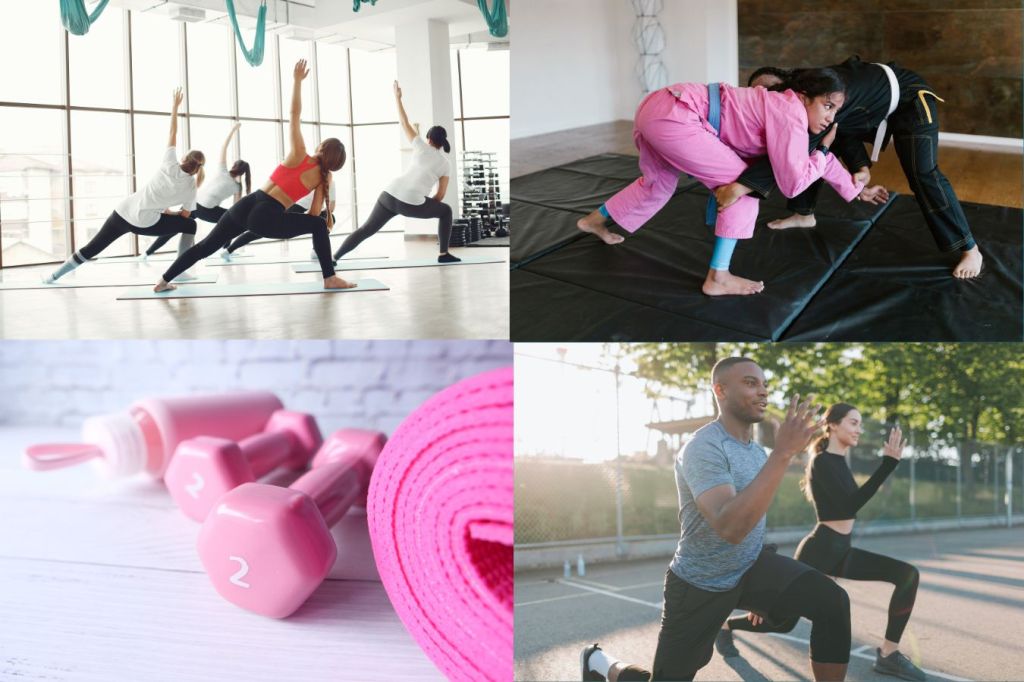
Research suggests that the best types of exercise are not only the ones that lead to reduced pain and that have an element of aerobic activity, but also ones that give you a feeling of self-efficacy. Martial arts in particular have been shown to help people reclaim their power and build a positive sense of self as they acquire practical skills. Plus, these types of exercises require so much focus, they serve as a form of distraction therapy. If you get to a point where you think you could handle a martial arts class, it might be a more positive experience than what you may have expected, and worth a try.
Conclusion
If you struggle with Anxiety, finding a way to take care of yourself is a necessary challenge, but one you can approach in a way that works best for you, and at your own speed. Find something that interests you, relaxes you, treats your pain, and that gives you a sense of self-accomplishment. Whatever you do, do it on your own terms and the results will follow.
May God Bless and Keep You.












 All The Anxieties
Leave a comment